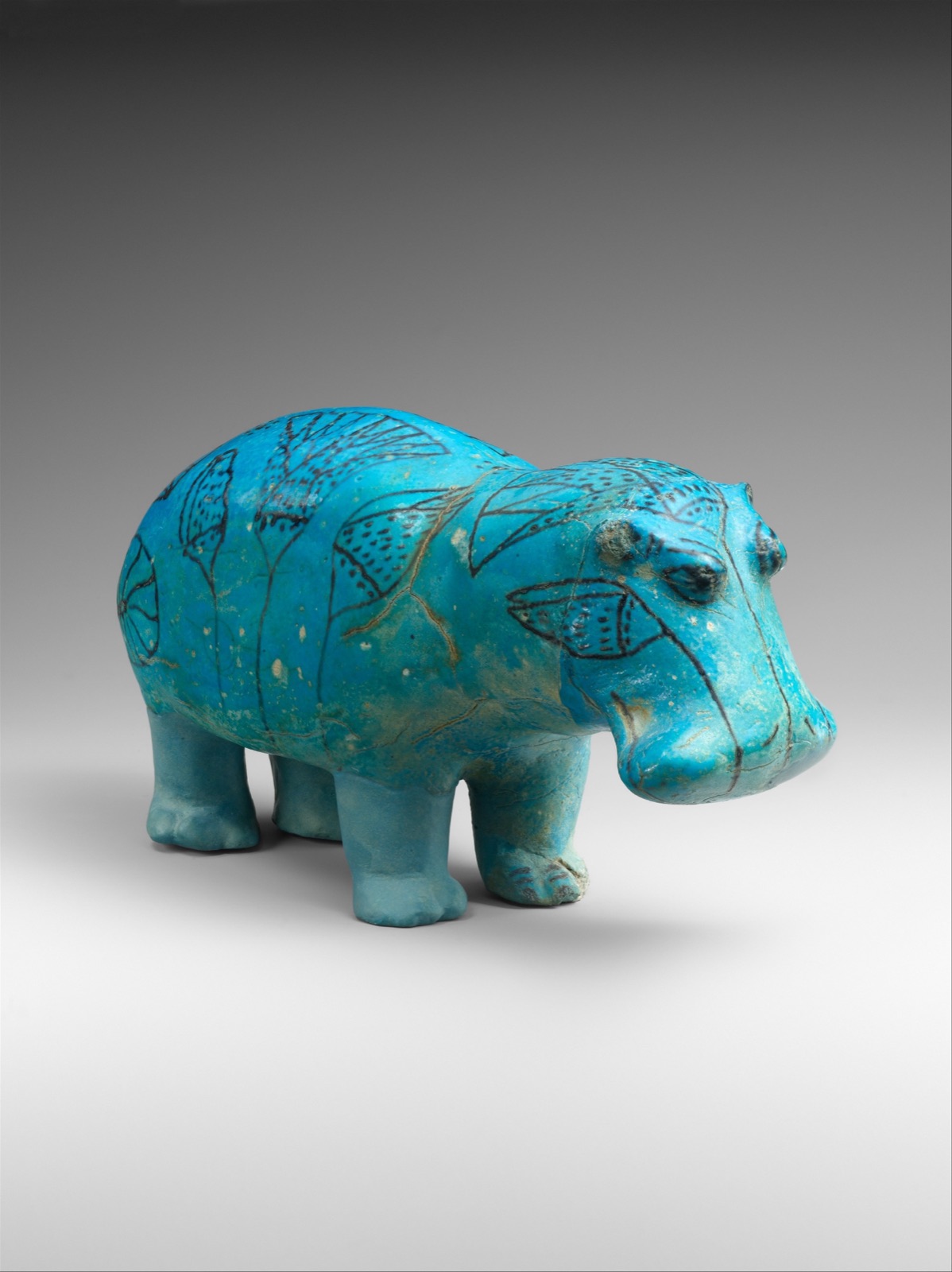
William, the Metropolitan Museum of ArtThe Metropolitan Museum of Art, Gift of Edward S. Harkness, 1917 · Open Access, CC0Image rights
Piece·tomb figurine·Abroad
'William', the blue faience hippo
A hippo with broken legs on purpose
- Date
- c. 1961–1878 BCE; 12th Dynasty, Middle Kingdom
- Where it is now
- Metropolitan Museum of Art, New York, USA
Documented: This story has clear published sources.
This story’s sources (2 sources), each opens its own page:
Scholars’ theory: An explanation scholars take seriously, but not settled.Folk tale: A story people tell; we give its origin and what is established.
The story
This little blue hippo is the Met's mascot, nicknamed William by a British magazine in 1931. Three of its legs were broken in antiquity, probably on purpose, so the dangerous animal could not hurt the dead man in the afterlife. The lotus flowers painted on it show its river home.
How it left
Dug up in 1910 by Sayed Khashaba, an Egyptian businessman who held a permit to excavate at Meir and sold finds; the Met acquired it in 1917 as a gift of Edward S. Harkness.
Requests to return it
No formal Egyptian request found.
What we know for sure
- Type
- tomb figurine
- Material
- faience
- Date
- c. 1961–1878 BCE; 12th Dynasty, Middle Kingdom
- Found
- Tomb of the steward Senbi, Meir, Asyut; 1910; Sayed Khashaba's excavations
- Now
- Metropolitan Museum of Art, New York, USA
- Inventory no.
- 17.9.1
Sources
Each source opens its own page.
Image rights
Hippopotamus ("William"), 17.9.1. The Metropolitan Museum of Art, Gift of Edward S. Harkness, 1917 · Open Access, CC0. Published by the museum through its Open Access programme, free to use without restriction.
Also shown in
Your name in hieroglyphs · SHETA: a puzzle game from SHATATiON, with the same signs. Meet SHETA