DocumentedScholars’ theoryFolk taleEvery story carries its trust level; tap it to see why.
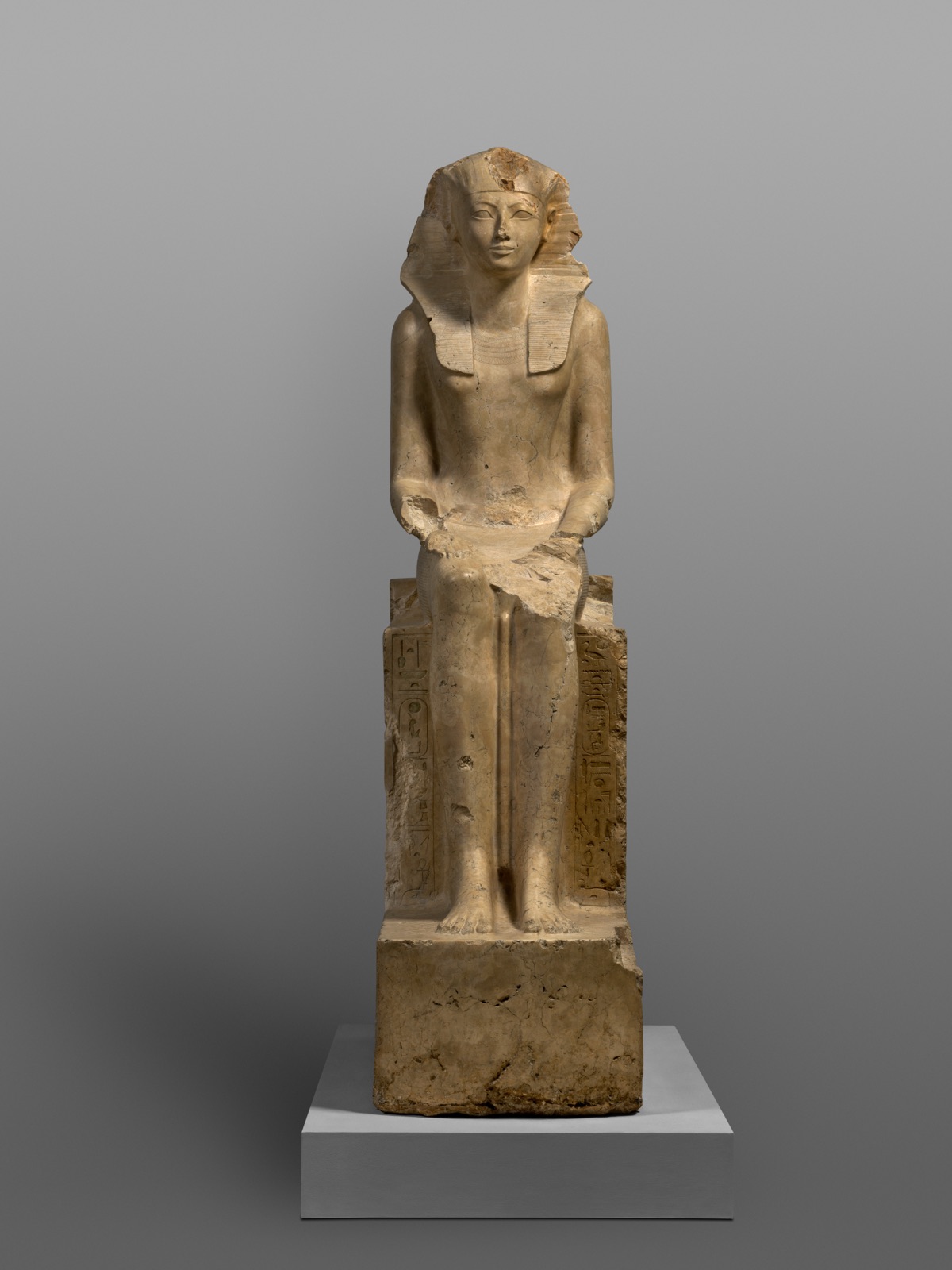
Seated statue of Hatshepsut, the Metropolitan Museum of Art, New YorkThe Metropolitan Museum of Art, Rogers Fund, 1929 · Open Access, CC0
Featured story·Abroad
A woman king, smashed and rebuilt
After Hatshepsut died, her statues were smashed and thrown into pits near her temple at Deir el-Bahari. More than three thousand years later, a team of archaeologists began putting the pieces back together.
Its lower half had been in Berlin since 1845; its upper half came out of the excavations some eighty years later. The two met only in 1929, through an exchange between the two museums.
2 sourcesA 3-minute read
Documented: This story has clear published sources.
This story’s sources (2 sources), each opens its own page:
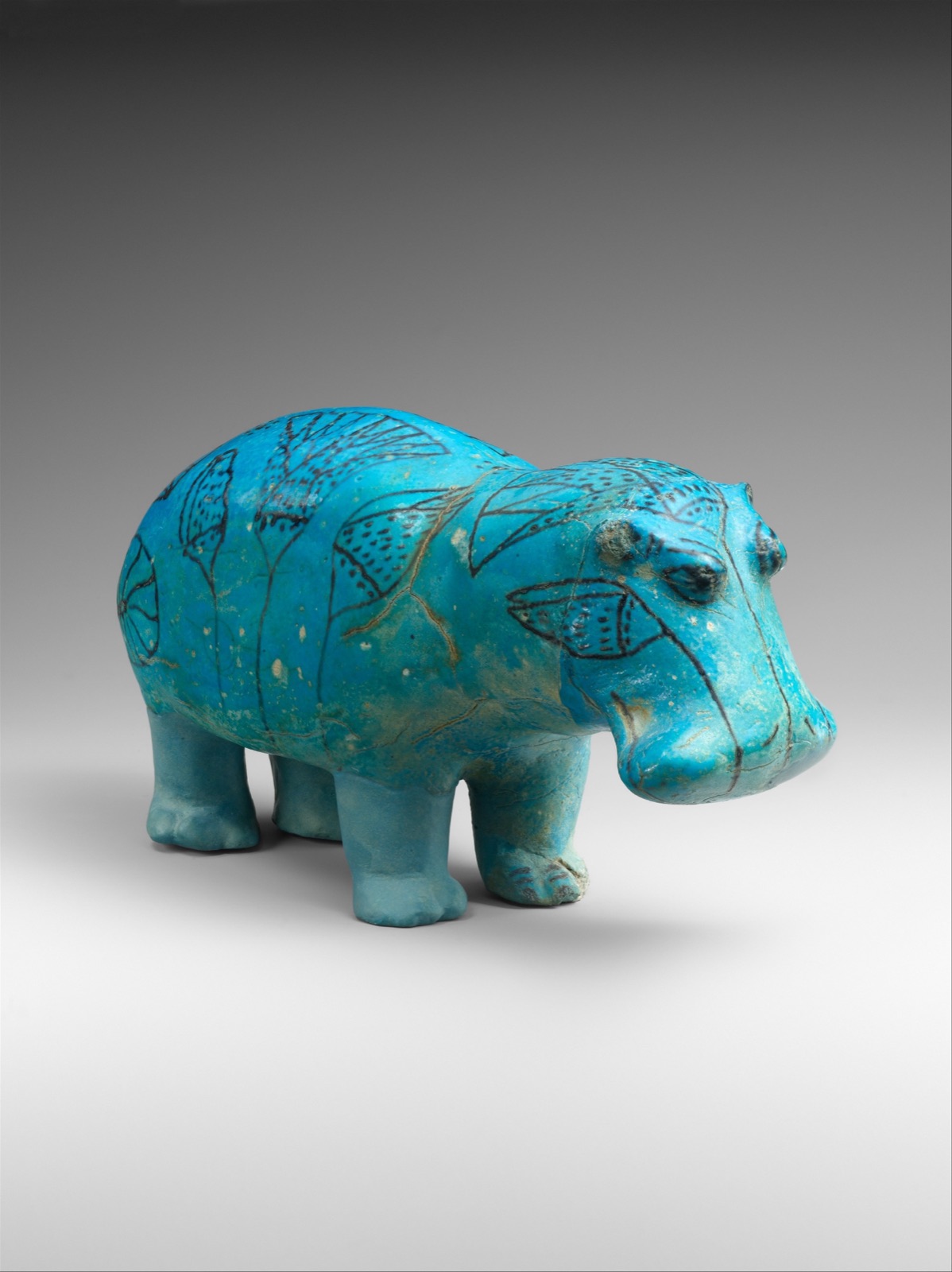
This little blue hippo is the Met's mascot, nicknamed William by a British magazine in 1931. Three of its legs were broken in antiquity, probably on purpose, so the dangerous animal could not hurt the dead man in the afterlife. The lotus flowers painted on it show its river home.
The Metropolitan Museum of Art, New York
Documented: This story has clear published sources.
This story’s sources (2 sources), each opens its own page:
Scholars’ theory: An explanation scholars take seriously, but not settled.Folk tale: A story people tell; we give its origin and what is established.
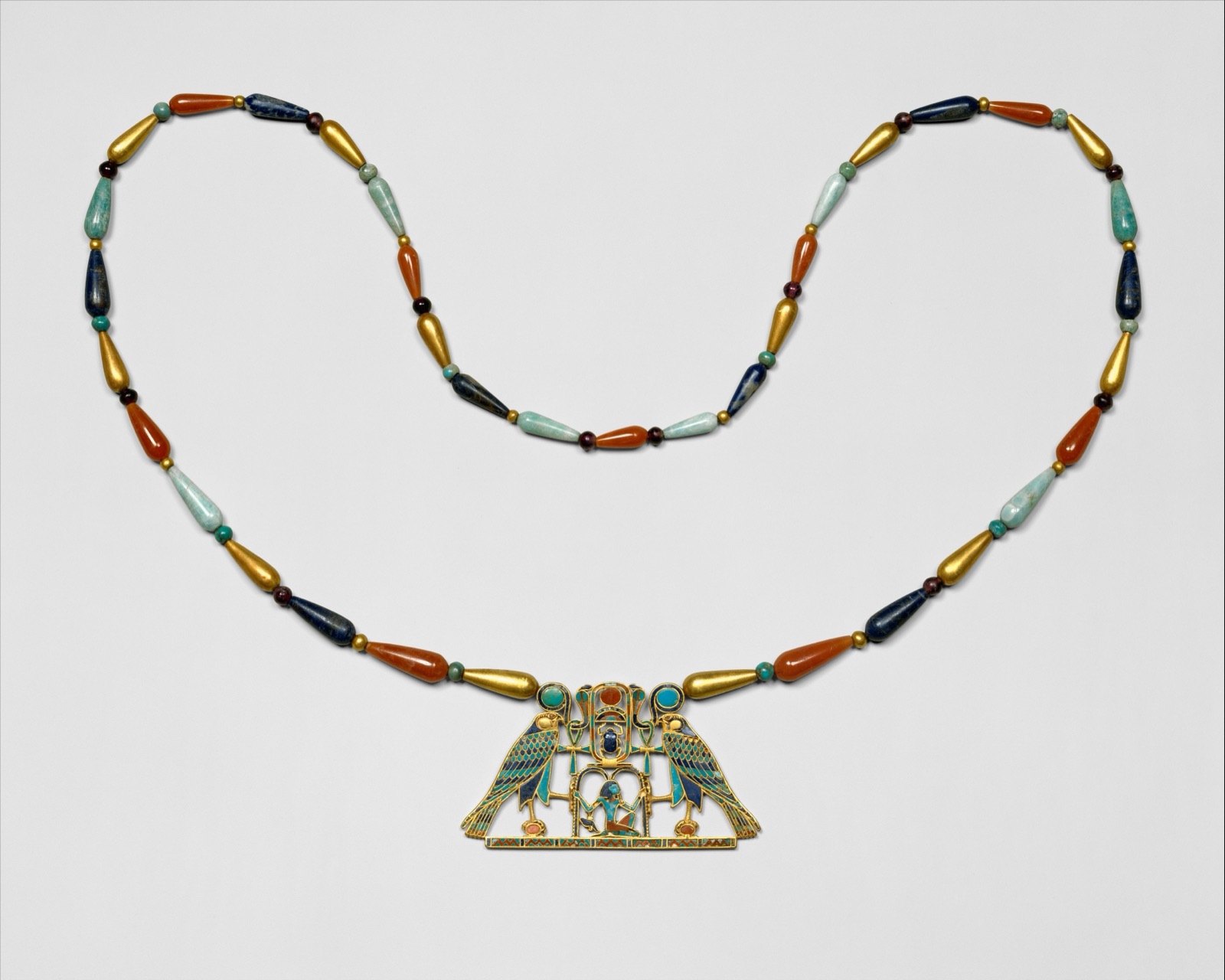
Pectoral of Sithathoryunet, the Metropolitan Museum of ArtThe Metropolitan Museum of Art, Purchase, Rogers Fund and Henry Walters Gift, 1916 · Open Access, CC0
The princess's tomb was robbed in ancient times, but the thieves missed a niche filled with mud. In 1914 the excavators carefully washed her jewels out of the mud: this gold pectoral holds 372 tiny cut stones. Cairo kept her crown; the rest went to New York.
The Metropolitan Museum of Art, New York
Documented: This story has clear published sources.
This story’s sources (3 sources), each opens its own page:
Rosetta Stone. The same decree is carved in three scripts: hieroglyphs, demotic and Greek. That is why Champollion could finally read hieroglyphs in 1822. On its sides, the British painted: Captured in Egypt by the British Army in 1801, and Presented by King George III.
British Museum, London, United Kingdom · Abroad
Documented: This story has clear published sources.
This story’s sources (4 sources), each opens its own page:
A work register from the village of the royal tomb builders lists why men missed work: illness, eye disease, a scorpion sting, or a wife’s or daughter’s period. One healer was often off making remedies.
An inscription from Giza records a dog named Abuwtiyuw, a guard of the king. His Majesty ordered a coffin from the royal treasury and fine linen in great quantity for its burial.
In the Rhind Papyrus, the scribe Ahmes finds the area of a round field by cutting one ninth off its width and squaring the rest. That works out to a value of pi of about 3.16.
In one myth, Ra sent his fierce Eye to punish humanity, and she became the lioness Sekhmet who could not stop. Ra had 7,000 jugs of beer dyed red; she drank, slept, and woke up gentle.